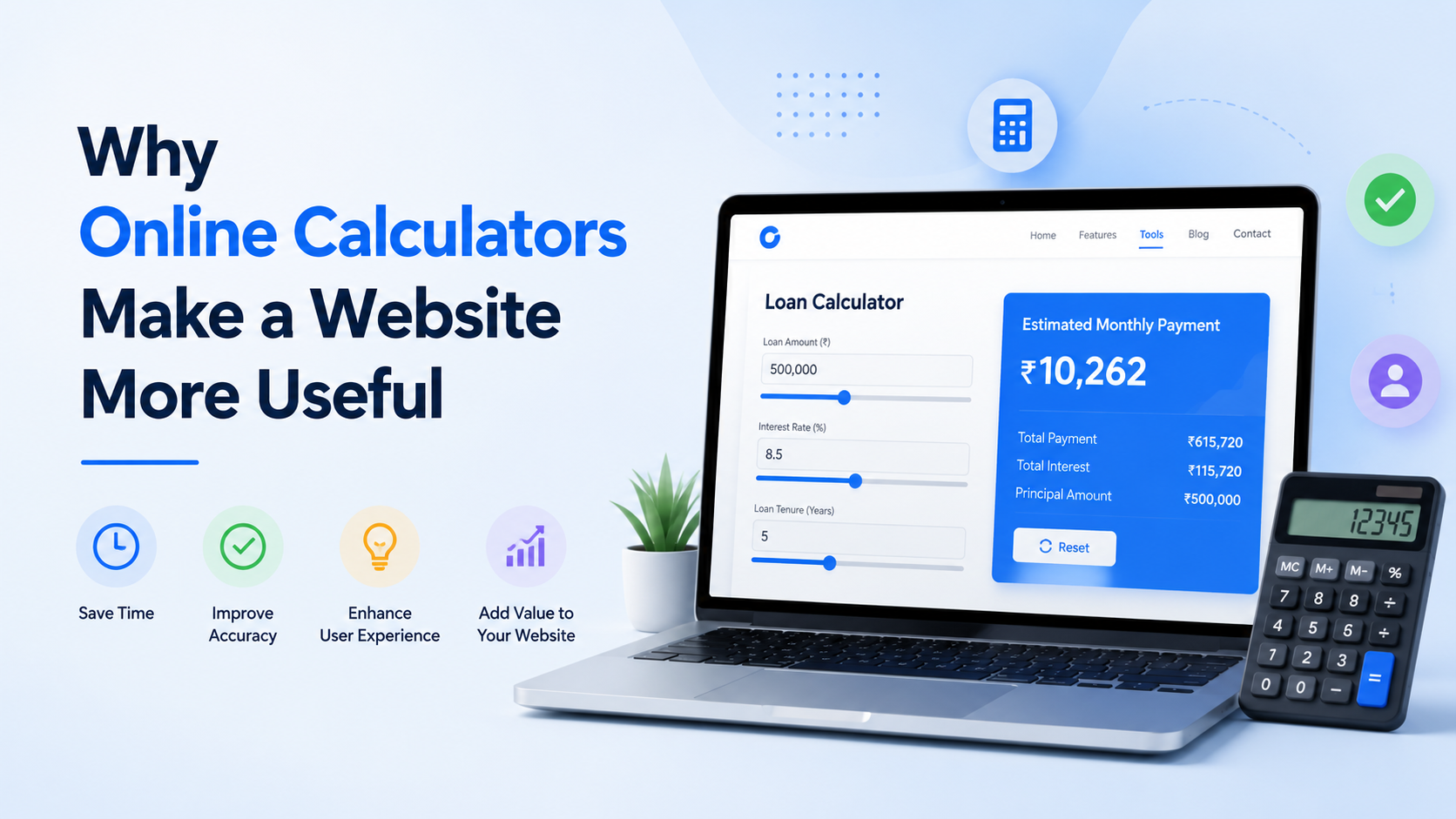
Why Online Calculators Make a Website More Useful
A business website should do more than present information. It should help visitors understand an offer, estimate their options, and move closer to a decision without unnecessary friction. That is one of the reasons online calculators have become such a practical addition to modern websites.
Many service-based businesses still rely on static pages filled with descriptions, promises, and contact forms. That can work up to a point, but it often leaves the visitor with the same question: what does this mean for me personally? An online calculator helps answer that question much faster than a long block of text ever can.
A calculator turns passive browsing into action
Most websites are built to be read. A calculator gives the visitor something to do. Instead of only scrolling through service descriptions, people can interact with the site and receive a result based on their own situation. That changes the experience immediately.
When a person enters their own numbers, preferences, or project details, the website starts to feel more relevant. It becomes less like a digital brochure and more like a tool. That shift matters because users tend to stay longer and engage more when a site helps them actively explore rather than passively consume information.
It helps explain complex services more clearly
Some offers are easy to understand at a glance. Others are not. Pricing may depend on volume, location, square footage, number of employees, project scope, delivery options, or a combination of many factors. In these cases, a calculator can do what plain copy often cannot: simplify complexity without oversimplifying the service itself.
Instead of asking the visitor to guess how pricing works or whether a service fits their needs, the site can provide a structured way to estimate it. This makes the business look more transparent and reduces hesitation. People are more likely to take the next step when they feel they understand the logic behind the offer.
Online calculators can improve lead quality
A calculator is not only useful for the visitor. It is also useful for the business. When a person uses a calculator before making contact, they often arrive better informed and with more realistic expectations. That can improve the quality of incoming leads.
For example, a website visitor who has already estimated a budget range, selected a service type, or calculated approximate project needs is less likely to send a vague inquiry. They are already thinking in more concrete terms. This saves time and makes the conversation easier for both sides.
That is one reason many businesses add calculators to service pages, quote-request flows, and landing pages. They help qualify interest without making the process feel heavy.
A calculator adds practical value to almost any niche
Online calculators are not limited to finance or insurance. They can work in a wide range of industries. A cleaning company can use one for service estimates. A web studio can use one for project scope. A fitness coach can use one for calorie or habit planning. A construction business can use one for material or cost estimates. A legal or consulting website can use one to help visitors understand fee structures or service tiers more clearly.
The real value is not in the calculator itself, but in what it helps the visitor do. If it reduces confusion, saves time, or makes decision-making easier, then it adds genuine value to the website.
It also strengthens the overall user experience
Good user experience is not only about design, spacing, and navigation. It is also about usefulness. A site can look polished and still feel passive. Adding a practical tool changes that. It gives the visitor a reason to interact, a reason to stay, and often a reason to return.
This is especially important for businesses that want their site to feel more functional and conversion-focused. A calculator can become one of the most useful parts of the page because it transforms interest into participation.
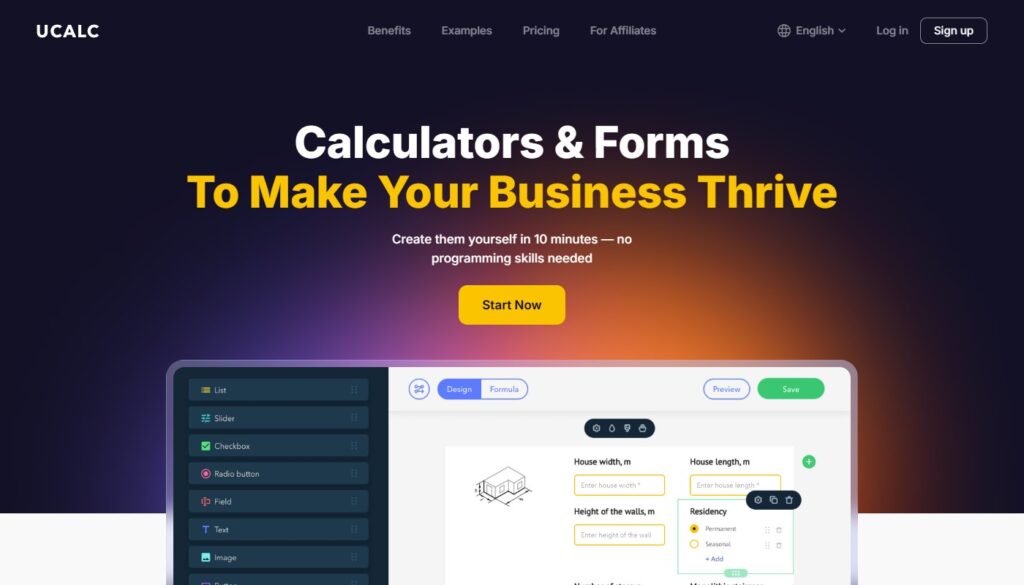
For businesses that want to add this kind of feature without turning the project into a custom development task, tools like uCalc make it much easier to integrate online calculators into a website in a practical way.
A more useful website usually performs better
In the end, the best websites are not always the ones with the most effects or the most text. They are the ones that help people move forward. An online calculator does exactly that. It gives users clarity, makes the site more interactive, and supports better decisions with less friction.
That is why calculators are no longer just an extra feature. In many cases, they are one of the most practical ways to make a website more helpful, more memorable, and more effective as a business tool.